


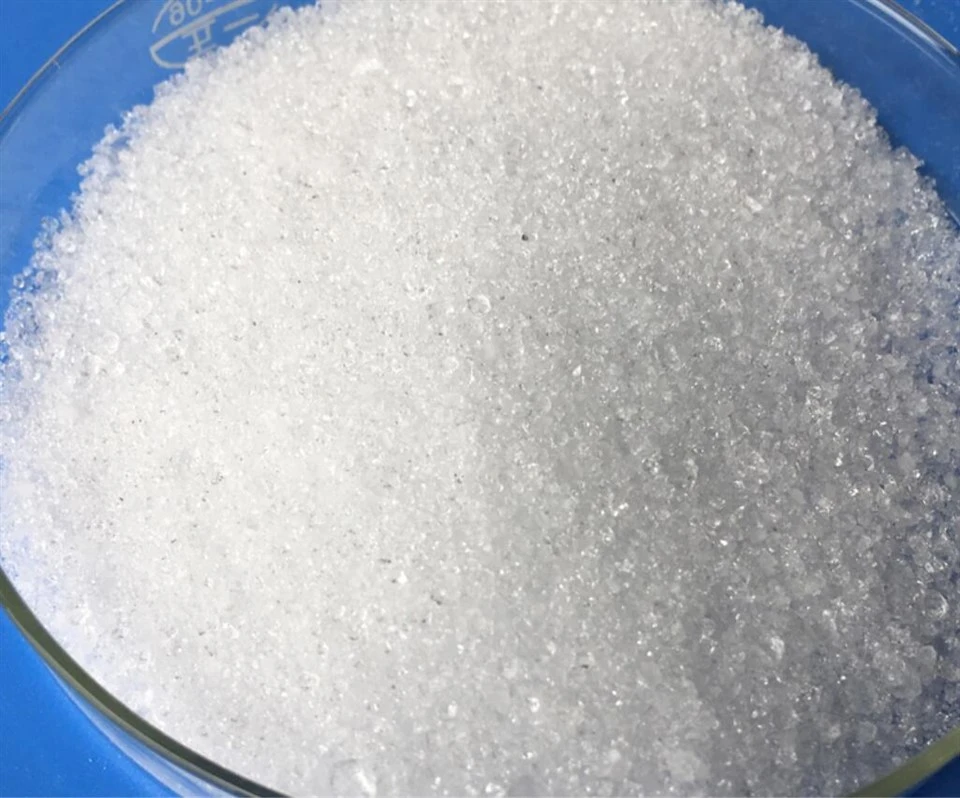
Monosodium Phosphate
2. Molecular Formula: NaH2PO4,NaH2PO4·H2O,NaH2PO4·2H2O
3. Molecular Weight: Anhydrous: 119.98; Monohydrate: 137.99; Dihydrate: 156.01
4. CAS: Anhydrous: 7558-80-7; Monohydrate: 10049-21-7; Dihydrate: 13472-35-0
Description
Monosodium Phosphate (chemical formula NaH₂PO₄) is an inorganic compound generated by the reaction of phosphoric acid and sodium hydroxide, and is an acid salt of phosphates. This compound is widely used in industrial systems that need to provide a phosphorus source or adjust acid-base conditions, and is one of the commonly used inorganic salts in basic chemical industry.
Features
Suitable for pH adjustment
Monosodium Phosphate (NaH₂PO₄) has excellent solubility in water. Whether it is anhydrous, monohydrate or dihydrate, it is easily soluble in water, and the pH value of the aqueous solution is generally around 4.4, which is stable and acidic. It can ionize H₂PO₄⁻ in water and can be used as an important component of the acidic buffer system. Its solubility characteristics and weak acid dissociation behavior determine that it can stably regulate the pH of the system in applications such as food processing, pharmaceuticals and fermentation, and avoid pH fluctuations that have an adverse effect on product quality.
Controllable structure
The product exists in three forms: anhydrous (molecular weight 119.98), monohydrate (137.99) and dihydrate (156.01), with clear thermal behavior. When heated to about 60°C, it begins to melt. When the temperature continues to rise to 100°C, the crystals begin to lose crystal water and gradually transform into anhydrous state. At temperatures above 100°C, it may further dehydrate to form sodium metaphosphate. This series of structural changes is reversible and the pyrolysis temperature is clear, indicating that its structure is controllable under thermal processing conditions and no decomposition reaction occurs.
Combined effects
Monosodium Phosphate has multiple functions such as buffer, emulsifier, antioxidant, nutritional supplement and stabilizer. It is often used in the food industry to adjust pH, improve protein solubility and emulsification effect. Its H₂PO₄⁻ ions have a certain chelating ability and can combine with metal ions to slow down the oxidation rate of lipids. When used as a food ingredient, it can enhance the water retention of meat, improve the penetration efficiency of salt water, and prevent sugar solution crystallization and protein precipitation. These functions come from the combined effect of the coordination ability of the phosphate group in its chemical structure and its stability in a weakly acidic environment.
1. Chemical Name: MONOSODIUM PHOSPHATE
2. Molecular Formula: NaH2PO4,NaH2PO4·H2O,NaH2PO4·2H2O
3. Molecular Weight: Anhydrous: 119.98; Monohydrate: 137.99; Dihydrate: 156.01
4. CAS: Anhydrous: 7558-80-7; Monohydrate: 10049-21-7; Dihydrate: 13472-35-0
5. Character: It is colourless column crystal, odorless, slightly deliquescence. The relative density is 2.04 and melting point is 60℃. It is easily soluble in water but insoluble in ethahol. If heated below 100℃, it can dissolve in crystal water and convert to monohydrate salt. When heated to 100℃, it will lose crystal water and change its anhydrous substances, which will become sodium metaphosphate if it's continue to be heated.
6. Usage: In food industry, it is used as buffering, character improving agent, emulsifier, nutrition supplement, antioxidant additive, brine penetrable agent, sugar clarifier, stabilizer, coagulant, fowl scalding agent.
7. Packing: It is packed with polyethylene bag as liner and a compound plastic woven bag as the outer layer. The net weight of each bag is 25kg.
8,Storage and Transport: It should be stored in a dry and ventilating warehouse.
FAQ
Q: What is Monosodium Phosphate?
A: Monosodium Phosphate (MSP) is an inorganic salt with the chemical formula NaH₂PO₄. It is commonly found as white crystalline powder or granules, easily soluble in water, and acidic.
Q: What are the physical and chemical properties of MSP?
A: MSP has high solubility, with a solubility of about 85g/100mL in water at 25°C, a pH value of about 4.5, a molecular weight of about 120 g/mol, and is odorless and hygroscopic.
Q: What are the common forms of MSP?
A: There are mainly two forms: anhydrous and monohydrate. When purchasing, you need to choose according to the application scenario. The hydrate has a higher water content but better solubility.
Q: In which industries is MSP mainly used?
A: It is widely used in the food industry (acidity regulator, emulsifier), water treatment, medicine, feed additives, chemicals and detergents.
Q: What are the quality standards for food-grade MSP?
A: Food grade must comply with national and international food additive standards, with a purity of ≥99% and extremely low heavy metal content, and no harmful impurities to ensure food safety.
Q: What is the role of MSP in water treatment?
A: As a buffer and pH regulator, MSP can prevent scale formation, improve water quality, and help soften industrial circulating water systems and protect equipment.
Q: Is MSP easy to absorb moisture and agglomerate?
A: MSP has strong hygroscopicity and needs to be sealed and moisture-proof during storage to avoid agglomeration, which affects the subsequent use effect and dispersibility.
Q: Is MSP toxic? What safety precautions should be taken when using it?
A: MSP is a low-toxic substance. Inhalation of dust may irritate the respiratory tract and eyes. Protective gloves and masks should be worn during operation to avoid large-scale inhalation.
Q: Is MSP stable at high temperatures?
A: MSP decomposes at high temperatures (about 300°C or above) to produce phosphoric acid and sodium salts. Its chemical properties are stable under normal storage and use conditions.
Q: Can MSP be mixed with other chemicals?
A: Generally, it is compatible with other inorganic salts, but it should avoid direct contact with strong alkali or strong oxidants to avoid adverse reactions.
Q: What is the role of MSP in feed additives?
A: MSP can provide easily absorbed phosphorus, promote animal bone development and energy metabolism, and regulate feed pH and improve feed quality.
Q: What is the role of MSP in detergents?
A: As a softener and pH regulator, MSP can effectively remove calcium and magnesium ions in water, improve washing effects, and reduce scale deposition.
Q: What are the requirements for the storage and transportation conditions of MSP?
A: It should be stored in a cool and dry place, avoid moisture and direct sunlight, and the packaging should be tightly sealed to prevent damage and moisture during transportation.
Hot Tags: monosodium phosphate, China monosodium phosphate manufacturers, suppliers, factory, phosphate for cooperation, phosphate for joint venture, phosphate for strategic alliance
Previous
Tripotassium PhosphateYou Might Also Like




Send Inquiry