

Sulfates are a group of chemical compounds that have a wide range of applications in various industries, including the rubber industry. As a leading sulfate supplier, I am excited to share with you the diverse applications of sulfates in the rubber manufacturing process. This blog post will explore how different types of sulfates, such as Sodium Sulfate, Calcium Sulfate, and Ammonium Sulfate, contribute to the production of high - quality rubber products.
Reinforcement of Rubber Compounds
One of the primary applications of sulfates in the rubber industry is their use as reinforcing agents. When added to rubber compounds, sulfates can improve the mechanical properties of the rubber, such as tensile strength, tear resistance, and abrasion resistance.
For example, calcium sulfate, commonly known as gypsum, can be used as a filler in rubber formulations. Its fine particle size allows it to disperse evenly throughout the rubber matrix, creating a strong network structure. This network helps to distribute stress more effectively when the rubber is under load, resulting in improved mechanical performance. The addition of calcium sulfate can also reduce the cost of rubber production without significantly sacrificing quality, as it is a relatively inexpensive material compared to some other reinforcing agents.
Sodium sulfate can also play a role in reinforcing rubber. It can interact with the rubber molecules and other additives in the compound, enhancing the cross - linking process during vulcanization. A more efficient cross - linking leads to a denser and stronger rubber structure, which in turn improves the overall durability and performance of the rubber product.
Processing Aids
Sulfates are valuable processing aids in the rubber industry. They can improve the flow properties of rubber compounds during mixing, extrusion, and molding processes.
Ammonium sulfate, for instance, can act as a plasticizer in rubber processing. It reduces the viscosity of the rubber compound, making it easier to mix the various ingredients together. This results in a more homogeneous mixture, which is crucial for achieving consistent product quality. During extrusion, the improved flow properties provided by ammonium sulfate allow the rubber to be shaped more easily into the desired forms, such as tubes, hoses, and profiles.
In addition, sulfates can also help to prevent the sticking of rubber compounds to processing equipment. This is particularly important in large - scale manufacturing operations, where downtime due to equipment cleaning can be costly. By reducing adhesion, sulfates increase the efficiency of the production process and minimize the need for frequent maintenance of the machinery.
Vulcanization Accelerators
Vulcanization is a critical step in rubber manufacturing that transforms raw rubber into a more durable and useful material. Sulfates can act as vulcanization accelerators, speeding up the vulcanization process and improving the quality of the vulcanized rubber.
Certain types of sulfates can react with sulfur, which is commonly used in vulcanization, to form active species that initiate and accelerate the cross - linking reaction between rubber molecules. This not only shortens the vulcanization time but also leads to a more uniform and complete cross - linking structure. As a result, the vulcanized rubber has better heat resistance, chemical resistance, and mechanical properties.
Color and Appearance Enhancement
Sulfates can also have an impact on the color and appearance of rubber products. Some sulfates, such as calcium sulfate, are white in color. When added to rubber compounds, they can act as a whitening agent, giving the rubber a brighter and more uniform appearance. This is particularly useful in applications where the aesthetic quality of the rubber product is important, such as in consumer goods or automotive interior parts.
In addition, sulfates can help to improve the surface finish of rubber products. They can reduce the occurrence of surface defects, such as blisters and pores, during the manufacturing process. A smooth and defect - free surface not only enhances the visual appeal of the rubber product but also improves its resistance to wear and tear.
Applications in Different Rubber Products
The applications of sulfates are widespread across different types of rubber products.
In the tire industry, sulfates are used to improve the performance and durability of tires. Reinforcing agents like calcium sulfate can enhance the tread wear resistance, while vulcanization accelerators can improve the heat resistance of the tire rubber. This is crucial for ensuring the safety and longevity of tires, especially under high - speed and heavy - load conditions.
In the production of rubber seals and gaskets, sulfates are used as processing aids to ensure proper sealing performance. The improved flow properties provided by sulfates allow the rubber to be molded precisely into the required shapes, creating a tight and reliable seal. The enhanced mechanical properties also ensure that the seals and gaskets can withstand the pressures and environmental conditions they are exposed to.
In the rubber footwear industry, sulfates contribute to both the performance and appearance of the products. They can improve the flexibility and durability of the rubber soles, while also enhancing the color and surface finish of the footwear. This makes the shoes more comfortable to wear and more attractive to consumers.
Quality Control and Standards
As a sulfate supplier, we understand the importance of quality control in the rubber industry. All our sulfate products, including Sodium Sulfate, Calcium Sulfate, and Ammonium Sulfate, are produced to meet strict quality standards.
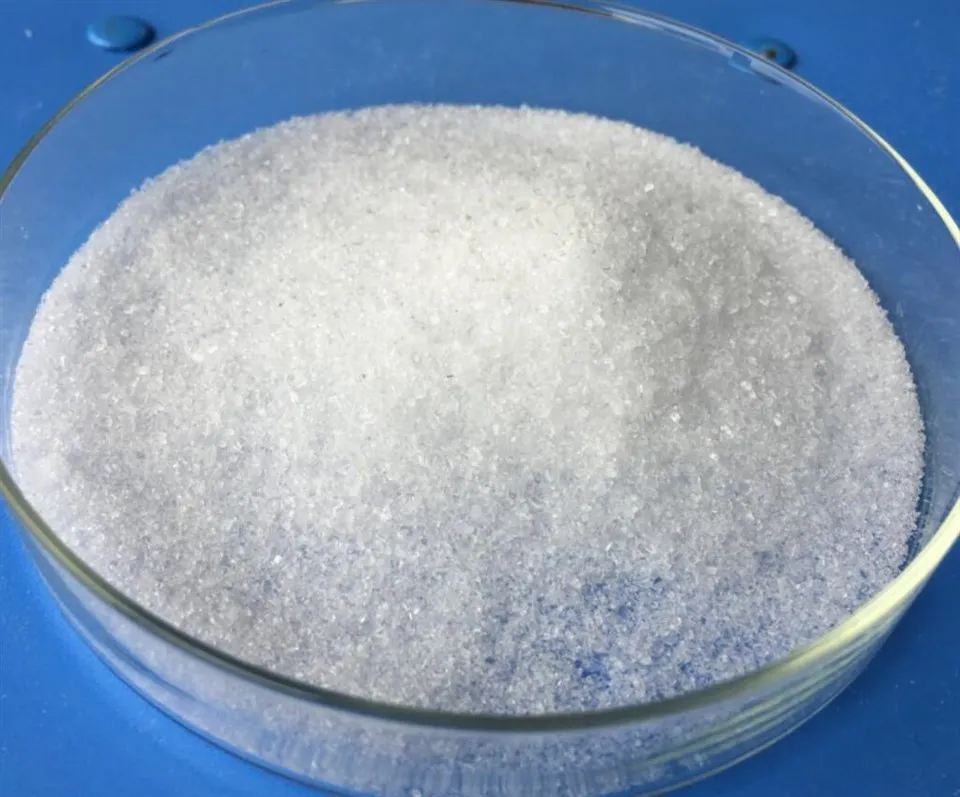

We conduct rigorous testing on our sulfates to ensure their purity, particle size distribution, and chemical properties. This ensures that they are suitable for use in the rubber industry and can provide the desired performance benefits. Our quality control processes also include compliance with relevant environmental and safety regulations, so you can be confident that our products are not only effective but also safe to use in your rubber manufacturing operations.
Contact Us for Your Sulfate Needs
If you are in the rubber industry and are looking for high - quality sulfates for your manufacturing processes, we would love to hear from you. Our team of experts can provide you with detailed information about our products, their applications, and how they can benefit your business. Whether you need a large - scale supply for continuous production or a small - batch for research and development purposes, we have the capacity to meet your requirements.
Contact us today to start a discussion about your sulfate needs and explore how our products can help you improve the quality and efficiency of your rubber manufacturing.
References
- "Rubber Technology: Compounding, Testing, and Applications" by A. Y. Coran
- "Handbook of Rubber Materials and Technology" edited by Jacob K. Ishai
- Industry research reports on rubber manufacturing and chemical additives


