


Ammonium Dihydrogen Phosphate
2. Molecular formula: NH4H2PO4
3. Molecular weight: 115.03
4. CAS: 7722-76-1
Description
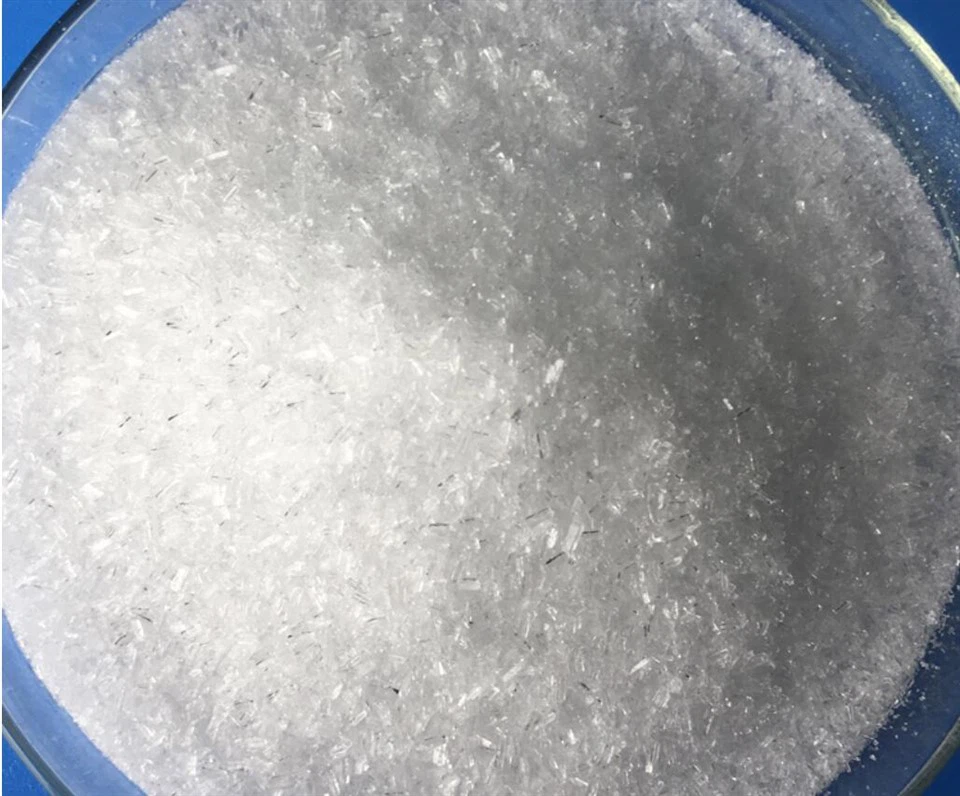
Ammonium Dihydrogen Phosphate (chemical formula NH₄H₂PO₄) is an inorganic compound generated by the reaction of phosphoric acid and ammonia. It belongs to the phosphate class of substances. It is colorless or white crystals at room temperature. It is easily soluble in water, almost insoluble in alcohols and organic solvents, and its aqueous solution is weakly acidic. It is one of the common phosphorus and nitrogen sources in the industrial and agricultural fields.
Features
Excellent solubility, adaptable to a variety of environments
The solubility of Ammonium Dihydrogen Phosphate is 368 g/L at 20°C. It can quickly dissolve in water to form a uniform solution, which can ensure its rapid effectiveness in food, fermentation and liquid formulations, and improve process efficiency. Its aqueous solution is acidic, and the pH value is generally around 4.2, which helps to adjust the pH of the reaction system or fermentation medium.
Stable ingredients
The molecular formula of this product is NH₄H₂PO₄, the molecular weight is 115.03, the structure is stable, the properties are stable at room temperature, it is non-hygroscopic and non-deliquescent. It is stable in the air, not prone to oxidation or decomposition reactions, and does not contain flammable components. Its thermal decomposition temperature is about 190°C, and ammonia will be released and converted into polyphosphates only when it exceeds this temperature. It is suitable for industrial applications that require heating or drying processes, and no special temperature control measures are required under normal transportation and storage conditions.
Chemical composition with dual functions
Ammonium Dihydrogen Phosphate is composed of one ammonium root (NH₄⁺) and one dihydrogen phosphate root (H₂PO₄⁻). After dissociation in water, it can directly provide two key nutrients, nitrogen and phosphorus. The product contains about 52% effective phosphorus (in terms of P₂O₅) and about 11% nitrogen (in terms of NH₄⁺), which makes it widely used in agricultural fertilizers and also suitable for use in the food industry as a yeast nutrient source, fermentation regulator, etc.
1. Chemical name: ammonium dihydrogen phosphate
2. Molecular formula: NH4H2PO4
3. Molecular weight: 115.03
4. CAS: 7722-76-1
5. Properties: white transparent crystal. It is soluble in water, acidic in water, slightly soluble in ethanol, insoluble in acetone and stable in air.
6. Uses: used in food industry as leavening agent, dough regulator, yeast food, fermentation auxiliary and buffer.
7. Package: lined with polyethylene plastic bag, covered with plastic woven bag, 25kg per bag.
8. Storage and transportation: it should be stored in a dry, ventilated and clean warehouse, loaded and placed with care to prevent moisture and heat. During transportation, it should be protected from rain and moisture, and should be isolated from toxic substances.
FAQ
Q: What is Ammonium Dihydrogen Phosphate (ADP)?
A: ADP is an inorganic salt with the chemical formula NH₄H₂PO₄. It is white crystals or powder in appearance and is easily soluble in water. It is commonly used in fertilizers, fire extinguishers, electronics, food additives and other industries.
Q: What are the main application areas of ADP?
A: ADP is widely used in agriculture (as a high-efficiency phosphate fertilizer), firefighting (as a component of dry powder fire extinguishing agent), food industry (as a fermentation aid and acidity regulator), and high-purity materials (preparation of electronic ceramics and crystal materials).
Q: What is the fertilizer effect of ADP in agriculture?
A: As the main component of compound fertilizer, ADP usually has an N-P-K ratio of 12-61-0, high nitrogen and phosphorus content, can be quickly absorbed by crops, and is suitable for seedling cultivation, topdressing and drip irrigation systems.
Q: Why can ADP be used in ABC dry powder fire extinguishing agent?
A: Because it can absorb heat and decompose at high temperatures, release flame-retardant gases and generate a layer of phosphate insulation, which effectively isolates oxygen and inhibits flame propagation, and is suitable for various types of fires.
Q: Is ADP easy to absorb moisture? How to package and store?
A: ADP is easy to absorb moisture and agglomerate. It should be sealed and stored in a dry, cool, ventilated environment to avoid contact with strong oxidants and humid air. The packaging is mostly woven bags lined with plastic bags, and some high-purity products are vacuum packed.
Q: Is ADP toxic to the human body?
A: ADP is a low-toxic substance with low acute oral toxicity, but inhalation of dust may irritate the respiratory tract, eyes or skin. It is recommended to wear personal protective equipment such as masks and gloves when using it.
Q: What are the solubility characteristics of ADP?
A: It has high solubility in water at room temperature and can quickly release nutrients or participate in reactions. This is one of the important reasons why it is widely used in agricultural and industrial applications.
Q: Is the application of ADP in the food industry safe?
A: Food-grade ADP must comply with national food additive standards. It is often used as an acidity regulator or buffer in baking powder and baked products. The amount used should be controlled within the scope permitted by regulations.
Q: Does ADP have an impact on the environment?
A: Excessive application in agriculture may lead to eutrophication of water bodies. Industrial discharges should be avoided from entering natural water bodies. It is recommended to use it within the legally permitted scope and establish a proper waste management mechanism.
Q: Is ADP stable at high temperatures?
A: It will decompose when heated to about 190°C, releasing ammonia and phosphoric acid. Therefore, high-temperature treatment or contact with strong heat sources should be avoided. Storage places should be equipped with temperature control and ventilation systems.
Q: Can ADP be mixed with other chemicals?
A: Avoid mixing with strong alkalis, strong oxidants, and chlorine-containing compounds to avoid chemical reactions or reduce product stability. It is recommended to operate according to the guidance of MSDS.
Hot Tags: ammonium dihydrogen phosphate, China ammonium dihydrogen phosphate manufacturers, suppliers, factory, phosphate for cooperation, phosphate for joint venture, phosphate for strategic alliance
Previous
Trisodium PhosphateYou Might Also Like




Send Inquiry